The market feels tight. Here's why.
As we move through 2026, many Idaho renters and landlords are asking the same question: Why does the market feel stuck?
Between elevated home prices, persistent mortgage rates, and a wave of new construction still working its way through the pipeline, it's easy to feel like the system is under pressure. The reality is, it is. But that doesn't necessarily mean a breakdown is coming. What Idaho is experiencing is a market under tension, and understanding it is what separates informed decisions from reactive ones.
Idaho's rental conditions are being shaped by three major forces pressing against each other this summer.

When buying slips out of reach, the rental market absorbs the demand.
Homeownership is out of reach for many.
Idaho's average home price now sits at $462,838, well above where it was just a few years ago, and above the national median. Many prospective buyers who find prices too high are looking to rent instead, driving up demand and prices in that segment.
The National Association of Realtors has flagged Boise alongside markets like Miami and New York City for a significant gap between what homes cost and what local families can actually afford.
This is the engine of rental demand this summer: people who want to buy but simply can't.
Mortgage rates are keeping renters in place.
Just like at the national level, Idaho's rental market is being held in place by financing costs. Rental conditions are more stable than during the pandemic surge, but affordability remains a challenge.
Slower rent growth has provided some relief, yet housing costs still consume a large share of income for many renters, especially in fast-growing urban areas.
New supply is still competing for tenants.
Idaho saw a construction boom, and those units are still being absorbed. The Treasure Valley's inventory has grown by 15% quarter-over-quarter, primarily driven by new construction completions and a slight uptick in existing home listings.
However, that inventory growth may plateau by end of Q2 as seasonal demand patterns emerge.
Where the numbers stand.
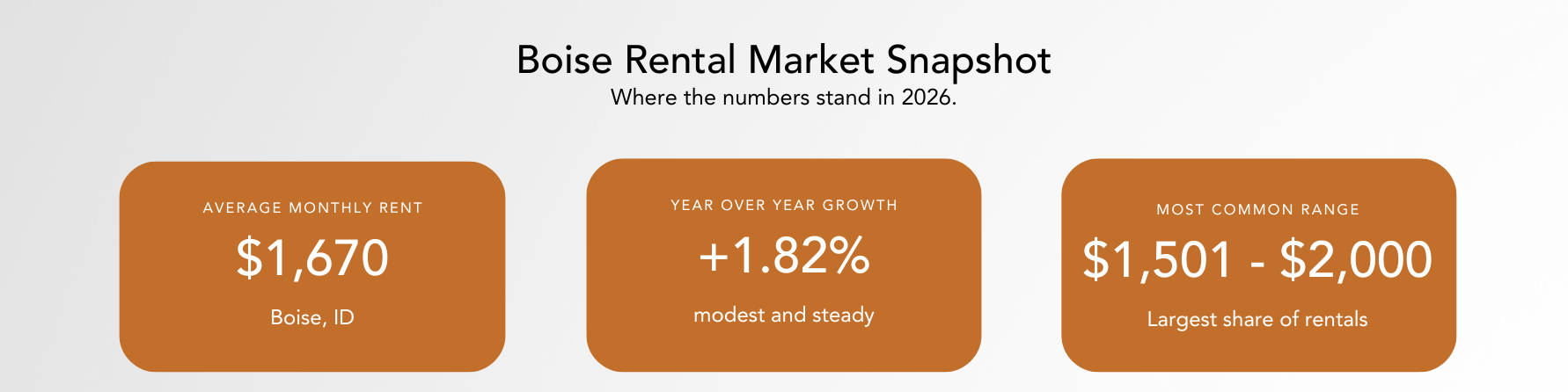
The average rent in Boise is currently $1,670, a 1.82% increase over the prior year. The largest share of rentals fall between $1,501 and $2,000 per month.
That's modest growth. Not a boom, not a retreat.
Strong employment and remote work trends continue to support a healthy rental market, with Idaho's scenic appeal and lifestyle amenities sustaining demand.
Modest growth. Not a boom, not a retreat.
The real risk this summer.
The biggest concern for Idaho landlords and investors this summer is not vacancy, but a renter base hitting its financial ceiling.
Renters are smarter, pickier, and more mobile than ever, and they're not afraid to move if the math stops making sense. As inflation lingers, more renters are expected to right-size, moving to different price points or smaller markets to preserve their sense of value.

Holding on to good residents is the most valuable move a landlord can make this summer.
Retention over rent hikes.
The key takeaway is this: Idaho is not a broken rental market. It's a constrained one.
Rental demand remains exceptionally strong among young professionals and families relocating to the area. Successful positioning requires a focus on cash flow positive properties in emerging neighborhoods rather than chasing peak appreciation zones.
For property owners, this summer calls for retention over rent hikes and strategy over speculation.
Your strategy should fit the market you're actually in.
Let's build one that does. Book a consultation with our team and we'll help you map out what this summer looks like for your portfolio.