
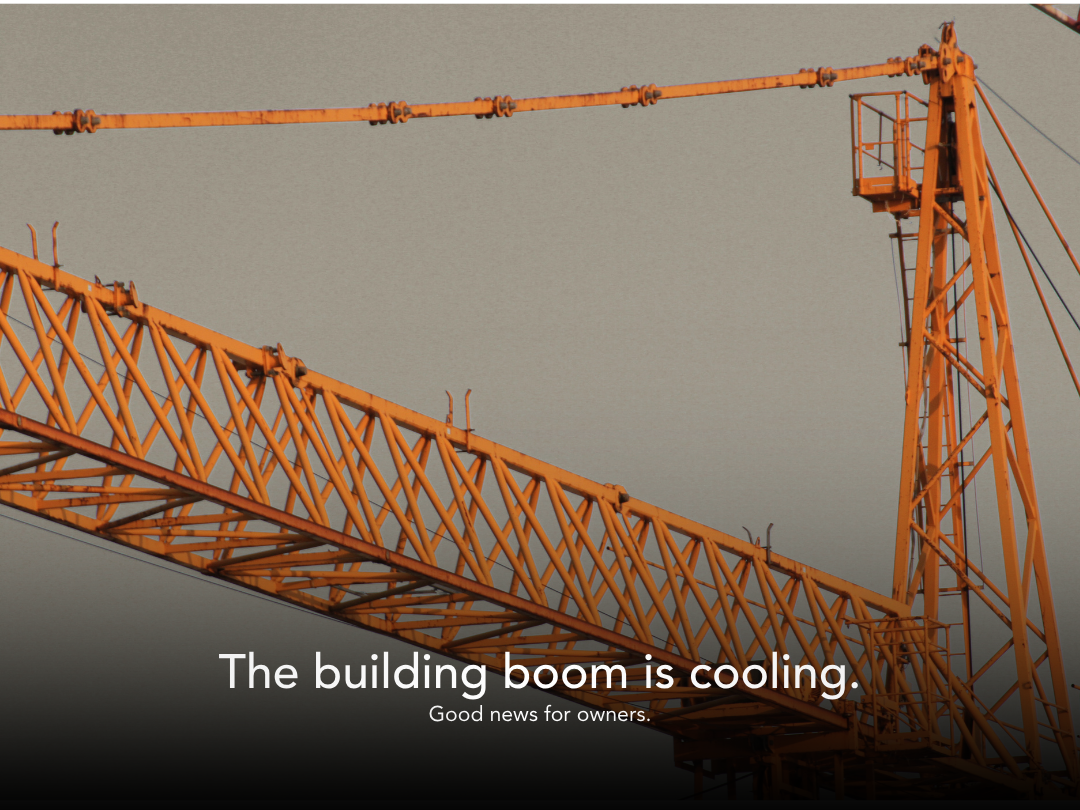

The Treasure Valley multifamily market is shifting, and the direction is encouraging.
The Treasure Valley multifamily market is shifting, and for property owners, the direction is encouraging.
After several years of record-breaking apartment construction, new supply is finally slowing. The metro delivered just over 2,000 units in 2025, down nearly 45% from the 3,700 units delivered in 2024.
That's not a market in decline. That's a market catching its breath. And what happens when supply pulls back while demand stays steady? Fundamentals improve.
Occupancy is up. Concessions are down. Leverage is shifting.
That's exactly what we're seeing. Occupancy rates are climbing, lease-up performance across newly delivered communities remains healthy, and perhaps most tellingly, concession packages are declining.
When landlords stop giving away free rent to attract tenants, it signals a real shift in leverage, back toward owners.
Demand isn't going anywhere.
Ada and Canyon counties continue drawing residents from California, Washington, Oregon, and beyond, drawn by lower housing costs, strong job growth, and quality of life.
That migration story underpins long-term apartment demand in a way that short-term construction cycles simply can't erase.

The pipeline ahead is manageable.
Looking ahead, approximately 2,055 units are under construction across 20 projects in the metro, a far more manageable pipeline than what the market absorbed in 2022 through 2024.
With tighter lending standards and elevated construction costs keeping speculative development in check, the next wave of supply should be measured rather than overwhelming.
What this means for our clients.
If you own multifamily assets in the Treasure Valley, the operating environment ahead looks more favorable than it has in several years. Rising occupancy and reduced concession pressure create room for thoughtful rent growth and improved net operating income.
For those considering whether to hold or sell, improving fundamentals typically support stronger valuations, particularly if interest rates moderate in 2026 or 2027 as many forecasts suggest.
For investors looking to enter the market, the window between slowing supply and strengthening occupancy has historically been one of the more attractive entry points in a cycle.
The Boise market isn't without its challenges. Affordability pressures and economic uncertainty are real. But the underlying story of the Treasure Valley remains one of growth, resilience, and long-term opportunity.
We're here to help you navigate what comes next.