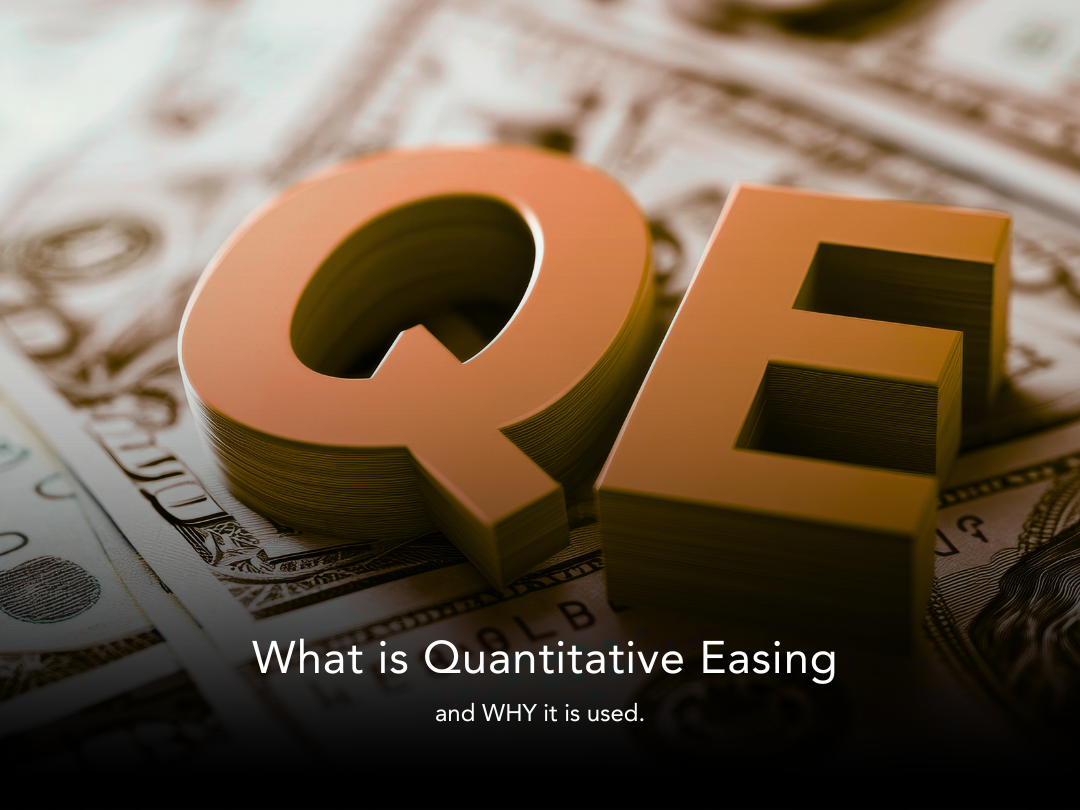
Quantitative Easing (QE) is a tool used by central banks (in the U.S., the Federal Reserve — the “Fed”) when conventional monetary policy (e.g., cutting short-term interest rates) becomes insufficient — for instance, when rates are already very low. QE involves large-scale purchases of financial assets, such as government bonds, mortgage-backed securities, or other longer-term debt/investment securities.
By buying these assets, the central bank increases reserves in the banking system, raising the overall money supply and boosting liquidity. This typically pushes up the price of those assets (because of demand) and lowers their yields (interest rates).
In effect, QE is meant to make borrowing cheaper, encourage lending, stimulate investment, and prevent deflation — aiming to buoy economic growth when the economy is weak or stagnating.
If a new QE program were to start today, the logic would likely be that the central bank sees risk of economic slowdown, maybe low inflation or weak growth or liquidity strain, and opts to inject liquidity to stabilize conditions.
How QE Helps — And Often Boosts — the Stock Market
When QE begins, it tends to have several effects favorable to equities (stocks):
Lower interest rates and cheaper capital
Because bond yields fall (as the central bank buys bonds), yields on “safe” assets go down. That makes fixed-income investments (like bonds or savings accounts) less attractive financially — encouraging investors to shift into riskier assets, like stocks, which potentially offer higher returns.
Portfolio rebalancing effect
As the central bank removes a large share of safe assets (government bonds) from the market, investors who previously held those may look for other opportunities — often equities, which pushes up demand (and price) for stocks.
Boost to business borrowing and expansion
Lower rates make borrowing cheaper for companies. Firms may take on new loans to invest in growth, expansion, hiring — which can improve their outlook and profitability, fueling bullish investor sentiment.
Psychological/wealth effect
Rising stock prices can create a “wealth effect,” where investors feel richer, may spend more or invest more — potentially stimulating broader economic activity, which can feedback into stronger corporate revenues and further stock gains.
Historically, major QE programs have coincided with robust rallies in equity markets.
Thus, if a new QE program begins today or is widely expected many stock investors could interpret that as a bullish signal, and stock markets might rally in the near term.
Impact on Cryptocurrency Markets: Why QE Could Fuel Crypto Rallies
It’s increasingly common to see cryptocurrencies (e.g., Bitcoin, Ethereum) responding to macroeconomic policies like QE, often with sharp reactions. Some of the main channels:
Liquidity and risk-on environment
QE injects liquidity and tends to lower yields on traditional safe assets. That reduces the attractiveness of those “safe” investments, nudging investors toward riskier — and potentially higher return — assets, including crypto and other speculative investments.
Inflation and inflation-hedge narrative
When central banks expand the money supply, there’s often concern (or expectation) about future inflation. Some crypto investors treat assets like Bitcoin as hedges against inflation or currency debasement, because many cryptocurrencies have capped supply or deflationary issuance structures.
Portfolio diversification / speculative demand
As traditional assets — bonds, savings, even some equities — may offer lower returns, investors seeking higher yields may diversify into crypto. Also, newly easy credit and abundant liquidity can fuel speculative demand for high-volatility assets.
Past empirical evidence
Studies suggest that QE announcements and periods of monetary expansion have coincided with significant rises in major cryptocurrencies (e.g., Bitcoin, Ethereum).
Therefore, a fresh wave of QE could — under favorable conditions and investor sentiment — lead to renewed strong inflows into crypto, boosting prices. That said: crypto remains volatile; macroeconomic uncertainty, regulation, or shifts in investor sentiment could also lead to sharp swings.
Effects on Real Estate / Housing Market & Broader Real Economy
QE doesn’t just affect financial markets — it often spills over into real-asset markets like housing and real estate. Here’s how:
Lower mortgage and borrowing rates
As QE pushes down yields on long-term debt, mortgage rates often decline or remain lower than they otherwise would. That makes borrowing to buy homes cheaper, increasing demand for housing.
Increase in home values (wealth effect via equity)
With more buyers entering the market thanks to lower financing costs, demand rises — which tends to push home prices upward, especially when supply is constrained. QE-driven housing price increases have been documented.
Stimulus to consumer spending and aggregate demand
When home values rise, homeowners feel wealthier (via home equity), which can spur consumer spending, borrowing (home equity loans, refinancing), and overall economic activity. This “wealth effect” can contribute to stronger aggregate demand.
Potential inflationary pressure on housing and rents
As demand rises and supply struggles to keep up (especially in tight housing markets), housing cost inflation can accelerate. That can have mixed effects — good for existing homeowners, challenging for renters or new buyers.
Hence, a new QE program would likely push real estate activity upward, both via more affordable financing and increased demand — but also risks further inflating housing prices, possibly exacerbating affordability issues.
Broader Economic Channels & Risks — What Could Go Wrong
While QE can stimulate markets and the economy, it’s not without downsides, and its benefits are unevenly distributed. Some important caveats:
Asset bubbles and “everything bubble” risk
When money is abundant and yield on safe assets is low, many investors chase returns — across stocks, real estate, crypto, commodities. This broad inflation of asset prices is often termed the “Everything Bubble.” If fundamentals (earnings, economic growth, demand) don’t keep up with asset price inflation, the bubble could burst, leading to severe corrections.
Wealth and income inequality
QE tends to benefit those who own assets — stocks, real estate, crypto. People without assets (or who live paycheck-to-paycheck) may see little benefit. Critics argue QE widens the wealth gap.
Inflation risk
By expanding money supply, QE can contribute to inflation, especially if supply-side constraints exist (like housing supply shortage, labor shortages, material shortages). Higher prices may erode purchasing power for everyday goods and services.
Difficulty of exit / long-term consequences
Once a central bank starts QE, unwinding it (selling off assets, reducing the balance sheet) can be tricky. If done too fast, it can destabilize markets; if done too slow — distortions and imbalances can persist.
Over-reliance on monetary policy
Repeated QE might lead investors and markets to expect central bank interventions as a “backstop,” encouraging riskier behaviors and reducing market discipline. That can create moral hazard.
Why Some People Might View “QE Starting Today” As Plausible And Why Others Say It’s Not Guaranteed
There are recent developments suggesting a shift in policy by the Fed: as of December 1, 2025, the U.S. central bank is ending a long phase of Quantitative Tightening (QT), which was shrinking its balance sheet.
The end of QT doesn’t automatically mean QE resumes. Some analysts note that ending QT may just mean “maintenance mode” — that is, reinvesting maturing securities rather than active expansion.
That said — in certain conditions (liquidity stress, economic slowdown, credit freeze, weakening growth) — central banks may decide to shift from maintenance to active QE. Given global macro uncertainty in many economies, it’s plausible that markets or commentators could interpret a policy shift as the start of QE.
Whether or not a “true” QE begins depends on how aggressive asset purchases are and how the central bank communicates its intentions. Markets may respond speculatively — but actual long-term benefits (or risks) depend on follow-through and economic conditions.
What This Means for Investors Strategy Considerations
If I were an investor and anticipating a QE program starting now, here are some strategies or thought-processes I might consider:
Equities: favor sectors likely to benefit from low interest rates and credit growth — e.g., growth stocks, tech, consumer discretionary, real-estate-related equities, companies with high leverage that benefit from cheaper borrowing.
Crypto (as risk-on / inflation-hedge): given crypto’s historical sensitivity to liquidity and risk appetite, allocate some portion — but remain aware of volatility and regulatory risks.

Real estate / REIT exposure: lower mortgage rates could push property demand higher; real-estate-investment trusts (REITs) might benefit from both low rates and rising property valuations.
Diversification is key: because QE-driven markets can overheat and lead to bubbles, it’s wise to balance with conservative assets, perhaps inflation-protected securities or cash-equivalents (though yield may be low).
Watch the exit strategy: if central bank eventually tightens, or inflation spikes leading to rate hikes — the same assets that soared under QE might correct sharply. Be ready to adjust.
QE: Powerful but Double-Edged
A new QE program — started today — could very plausibly spark rallies across stocks, crypto, and real estate, via increased liquidity, lower rates, and shifting investor risk appetite. For many investors, that could look like an opportunity to ride a bullish wave.
But QE is double-edged: what brings gains can also inflate bubbles, exacerbate inequality, create long-term distortions. The real economic boost to Main Street (jobs, wages, real income) is less certain; often the benefits accrue disproportionately to asset holders.