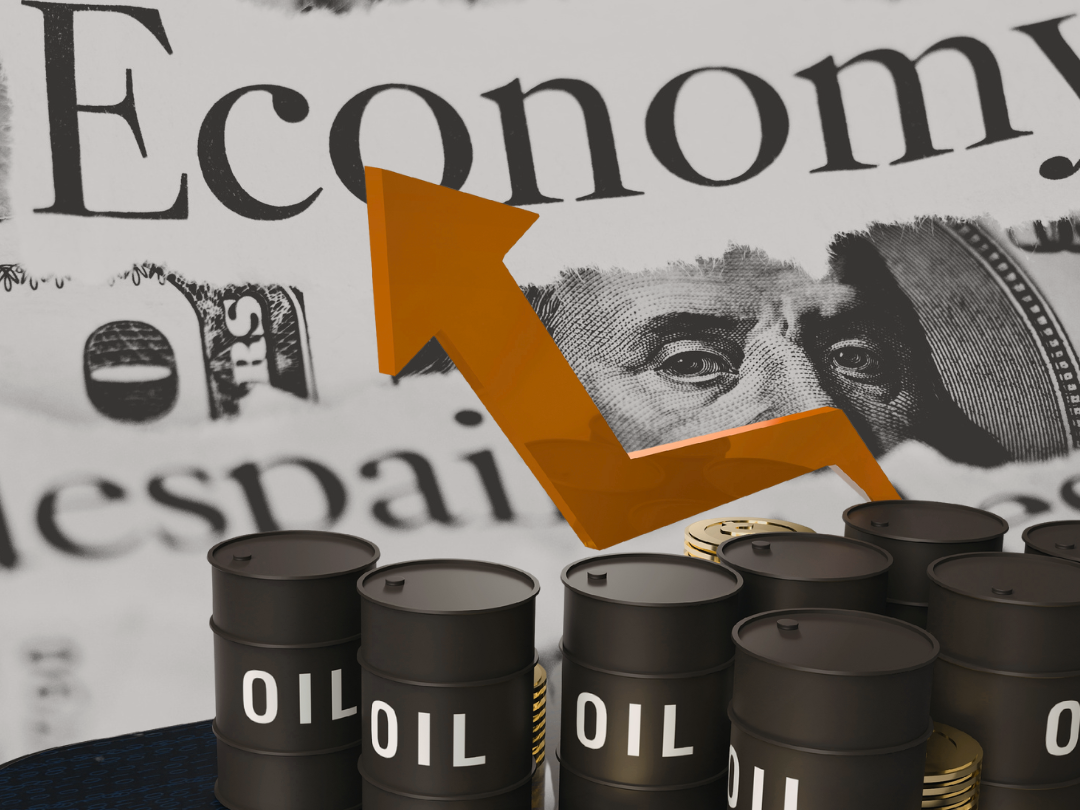
When oil prices stay elevated, the economy feels it. Eventually.
Turning to global developments, ongoing geopolitical tensions in regions such as Iran continue to raise concerns about energy supply stability. This naturally leads to an important historical question: what happens when oil remains above $100 per barrel for an extended period?
Historically, sustained high oil prices act as a slow but meaningful drag on economic growth.
The first place it shows up: your wallet.
The first and most immediate impact is felt by consumers through higher gasoline and energy costs, which reduce discretionary spending. This often leads to softer demand in sectors such as retail, travel, and dining.
Over time, higher transportation and production costs begin to filter through the broader economy, contributing to inflationary pressure across goods and services.
Businesses in transportation, manufacturing, and logistics are particularly sensitive, as rising input costs compress profit margins and can lead to reduced hiring, slower expansion, or cost-cutting measures.
A pattern that repeats itself.
Periods such as the lead-up to the Global Financial Crisis and the 2011 to 2014 high oil environment illustrate a consistent pattern: while economies can withstand elevated oil prices temporarily, prolonged exposure increases financial strain and economic fragility.
The longer oil stays elevated, the harder the recovery tends to be on the other side.
Why the Federal Reserve pays attention.
High energy prices also create challenges for monetary policymakers. Inflation driven by energy costs can force the Federal Reserve to maintain higher interest rates for longer periods, which increases borrowing costs across the economy, including mortgages, business loans, and consumer credit.
This typically leads to a cooling effect in sectors such as housing and investment activity.
In more extreme historical cases, such as the 1973 Oil Crisis, sustained energy shocks contributed to stagflation: an environment of stagnant growth combined with high inflation. While modern economies are generally more resilient, the underlying dynamics remain similar. Prolonged energy inflation tightens financial conditions and increases recession risk.
The takeaway.
In short, elevated oil prices rarely cause immediate economic disruption. But over time, they place increasing pressure on consumers, businesses, and policymakers, raising the likelihood of a broader economic slowdown if conditions persist.
For investors, the signal to watch isn't a single headline or a short-term spike. It's whether elevated prices stick around long enough to reshape consumer behavior, business hiring, and Fed policy.
That's the point where oil stops being news and starts being a real drag on the economy.